- AI Visibility
- GEO
- SEO
- AEO
- Marketing Tools
13 Best AI Visibility Tools to Track Performance in AI Search (2026)
As AI search transforms how content is discovered, tracking brand visibility inside ChatGPT, Perplexity, Gemini and other generative AI assistants matters more than ever. We compare 13 leading AI visibility optimization tools, evaluating their ability to track brand mentions, citations and crawler activity.


Monte Malukas
Co-Founder @ Peasy. 20+ years in software development and marketing. Founded and exited multiple ventures. Worked with companies from seed stage to global brands on product and growth. LinkedIn
Ever since the concept of Generative Engine Optimization (GEO) burst into mainstream consciousness, the SEO community has been more divided than I’ve ever seen. And it’s easy to see why.
Depending on who you ask, GEO is either a subset of SEO that naturally builds on its traditional practices - or a complete paradigm shift that will make the old search optimization rules obsolete.
What nobody can deny, however, is that artificial intelligence has fundamentally changed how people search.
For the first time in two decades, the classic search engine results page - the blue links we’ve blindly optimized for since the early 2000s - is no longer the only way we find information. People now turn to AI assistants for answers, recipes, relationship advice or simple insights that used to belong exclusively to Google and its competitors.
Despite Google’s constant boasts about rising search volumes and market share, I strongly believe those numbers do not reflect the reality nor the generational shift in search behavior happening behind those stats. LLMs like GPT-5 already outperform traditional engines on complex, multi-layered queries. Anyone who has followed this shift closely can see the signs. After all, we don’t know exactly how many queries now begin and end inside AI conversations that never get counted as “searches”.
Meanwhile, Google itself hasn’t helped its case. The quality of search results has been declining for years. The almighty G, with its hallucinating AI overviews, has done more damage to the public’s trust in AI than any other company. To be fair, the broader community shares some blame - we collectively allowed Google to use and summarize our content freely while starving creators of referral traffic. By the time most content publishers realized what was happening, it was already too late to push back effectively.
Yet not everything is smoke and mirrors. The LLMs powering leading AI chatbots have evolved significantly. ChatGPT and Perplexity, in particular, have redefined the quality and fluidity of the search experience - Perplexity especially standing out for its accuracy and the convenient display of cited sources used to deliver answers. Something that Google struggles with to this day. No wonder Perplexity is emerging as one of the strongest challengers in the next phase of AI search.
But as business expectations evolve, so does the challenge: how do you measure visibility in a world where traditional search metrics no longer apply?
As with every new frontier, there’s been no shortage of opportunists jumping on the AI search optimization bandwagon. A flood of GEO tools appeared almost overnight, many of them heavy on marketing buzzwords but light on substance. For brands, marketing agencies and SEO professionals, separating genuine tools from shady landing pages with empty promises has become increasingly difficult.
One important note before we dive in: being actively involved in this space, I must clarify that to this day, there is not a single tool that can accurately track “rankings” in AI search the way we track them in traditional search. Unlike conventional search engines where results are deterministic and consistent, answers delivered by AI chatbots are non-deterministic by nature. No two users will receive identical responses to the same prompt: answers vary based on conversation history, user preferences, context and even the timing of the query. What these tools can do is track patterns, citations, visibility trends and brand mentions across AI platforms - which, while not perfect rankings, still provide valuable insights into your AI search presence.
In this guide, we’ve selected the best AI visibility tracking tools that actually deliver on their promises and genuinely help marketers understand, track and optimize their presence in AI search.
Best AI visibility tools at a glance
- Peasy for crawler activity, revenue attribution and AI traffic analytics
- Promptwatch for comprehensive AI visibility tracking
- Profound for enterprise monitoring
- AirOps for content optimization
- Peec.ai for clean UX and simplicity
- AthenaHQ for premium enterprise features
- Otterly.AI for AI keyword tool
- Scrunch for enterprise monitoring
- SE Ranking for SEO suite integration
- Ahrefs Brand Radar for Ahrefs users
- Semrush AI Toolkit for Semrush users
- Writesonic for content creation
- SimilarWeb for AI traffic intelligence
Promptwatch
- Best for comprehensive AI visibility tracking

Promptwatch is one of the best AI visibility optimization platforms on the market right now. Everything from the UI to features and how well the product is fleshed out puts it in a league of its own.
And yet, it doesn’t get the deserved attention it should - that’s not surprising since it’s a Netherlands-based European startup, and as is the case, US-based companies get more love from TechCrunch and the Valley echo chamber. The reality, however, speaks for itself.
What makes Promptwatch stand out is the completeness of the product. The platform delivers features that are essential for AI visibility tracking.
Real-time brand visibility monitoring covers ChatGPT, Claude, Grok, Perplexity, Gemini, DeepSeek and pretty much all the other major AI chatbots. The platform provides multi-model testing, prompt analytics showing which queries trigger brand mentions and comparative insights that benchmark your performance against competitors.
The multilingual support, content gap detection and sentiment analysis help you understand where improvements are needed and provide actionable data you can use for optimization.
The interface is clean, intuitive and puts everything where you’d expect it to be. The onboarding is smooth and you can have your first visibility report running within minutes.
Pricing starts at reasonable tiers with free trials available, making it accessible beyond enterprise budgets. For teams serious about AI visibility who want depth without enterprise bloat, Promptwatch is the clear choice.
Peasy.so
- Best for AI analytics, citations, referrals, conversions and GSC search performance in one dashboard
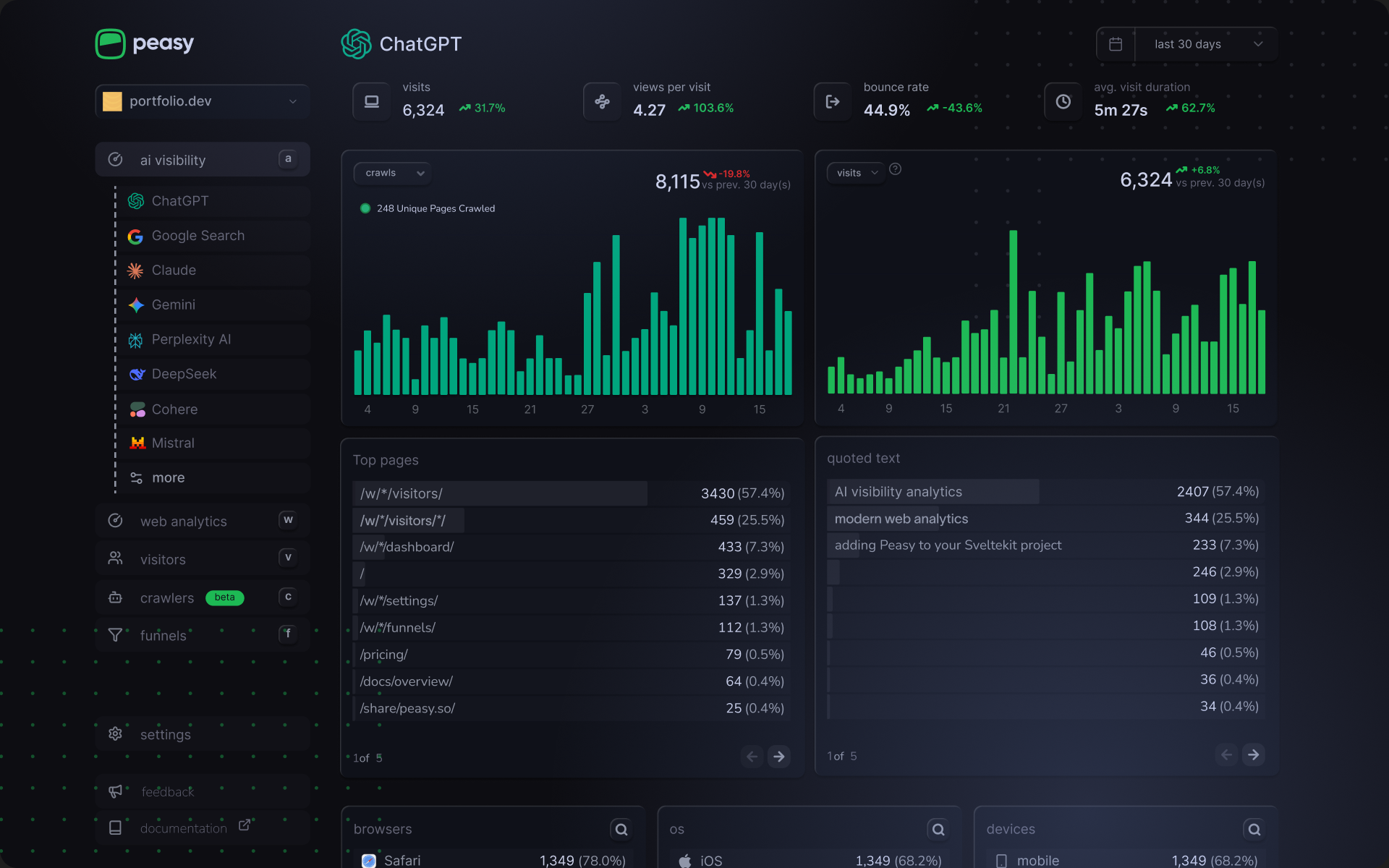
Here’s why Peasy deserves its place on this list and why it’s fundamentally different from everything else here.
Peasy delivers AI traffic and citation data that is 100% verifiable and is based on real referral traffic rather than automated prompt tracking. It can be directly tied to conversion and revenue. You can track the full cycle: crawl type, referral click and AI chatbot all the way to conversion.
The platform delivers core web analytics - pageviews, visitors, traffic sources, conversions, behavior tracking. Peasy integrates with Google Search Console, offers visitor heatmaps, custom events, funnels and a convenient way to get analytics data using smart, AI-powered queries. It has built-in dedicated dashboards for ChatGPT, Claude, Perplexity, Gemini, DeepSeek, Cohere, Mistral and GSC.
The citation tracking feature shows you the exact quoted text when AI assistants cite your content, whenever deepresearch is performed in the AI conversation.
This is real, 100% verifiable referral data from actual AI conversations. Peasy’s crawler analytics breaks down platform-specific bot activity (OpenAI, Meta, Apple, Microsoft, Perplexity, Google, Anthropic), tracks crawl frequency, shows you which user agents are visiting your website and identifies crawl purposes (indexing, chat, search).
This level of crawler visibility is something only a handful of platforms offer - Cloudflare provides it through their infrastructure layer, Promptwatch includes it in their monitoring suite and Peasy has it built directly into its analytics platform.
Peasy analytics is GDPR-compliant with UK data storage and no cookies required.

Pricing is transparent, with the basic Starter plan starting at $47/mo (100k events, 1 domain).
Peasy specializes in actual AI traffic and crawler behavior rather than synthetic prompt monitoring. The platform serves industry professionals who want to combine traditional web analytics with AI visibility tracking. You can use it as a privacy-first (if that matters for compliance) Google Analytics alternative or as a standalone AI visibility tracking tool.
Profound
- Best for large enterprises with big budgets

Let’s give credit where it’s due - Profound were among the first serious players in this space, raising multiple VC rounds and still leading in enterprise AI visibility and adoption. That said, stack Profound up against tools like Promptwatch and the gaps become obvious.
Their pitch hooks you right away: track your AI visibility, see where and how AIs mention your brand and get insights to boost your search presence.
Pricing kicks off at $99-$399/month for basic plans (covering only core chatbots like ChatGPT), which feels limited compared to competitors’ options. For full coverage, you’re looking at $1,000+ and up per month on Enterprise tiers. You get monitoring, dashboards, competitive benchmarking, actionable recommendations but content optimization stay basic unless you go all-in.
I’ve dug through tons of LinkedIn and Reddit reviews and the vibe could be summed up somewhat like this: lots of hype that too often leaves users disappointed and feeling overcharged for the delivery. Their Conversation Explorer delivers solid real-time insights, but common feedback from marketing and SEO leaders is that it dumps data on you without clear next steps. That has started to change since they introduced Workflows for content creation.
To put it in simple terms, if you’re not a Fortune 500 brand with a dedicated team to interpret and act on the data, you’re essentially paying extra premium for a brand name.
Profound’s biggest advantage is its proprietary data: billions of server logs, 100+ million real user conversations and millions of daily prompts across all major LLMs.
AirOps
- Best for content optimization
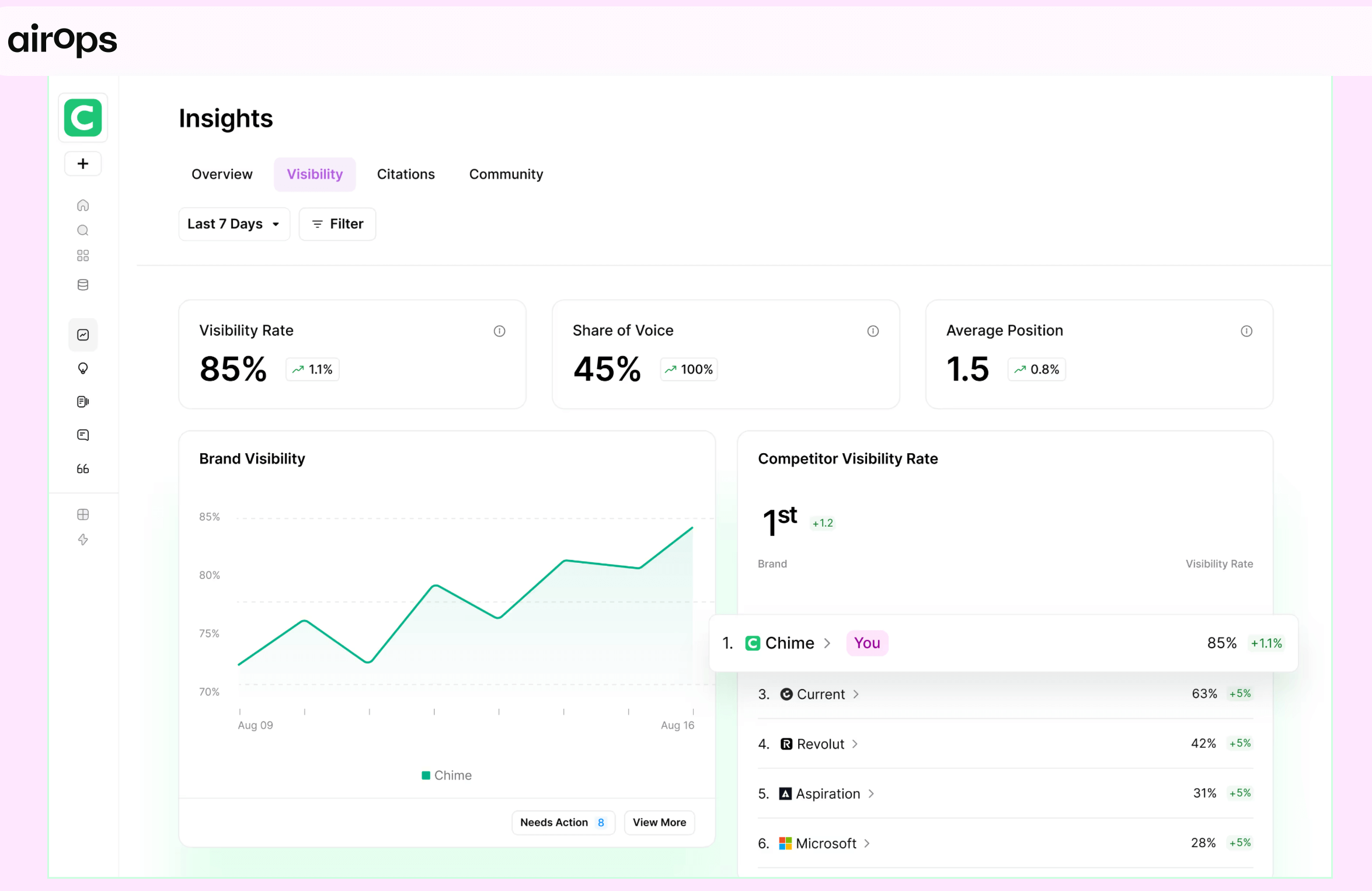
AirOps is an interesting outlier in this list. The platform is more of a content optimization tool for AI search rather than a visibility tracking tool. Although you can do both, the distinction matters.
Most tools on this list focus on tracking and monitoring how your brand appears in AI responses. AirOps approaches the problem from a different angle: helping you create and optimize content that’s more likely to be cited by AI chatbots.
The tool provides AI-powered content analysis, identifies what makes certain content more ‘AI-friendly’ and helps you structure your content for better discoverability in AI search. The platform serves as the content creation and optimization layer that works alongside AI visibility monitoring tools.
An interesting feature that AirOps offers is the optimization of existing pages for AI search indexing and provides insights into content gaps based on AI search patterns.
The platform is particularly useful for marketing teams that already know where they stand with AI visibility and need help improving their content strategy.
The challenge with AirOps is the limited visibility metrics compared to dedicated tracking tools. At the time of this article, real-time brand mentions, competitive benchmarking and citation tracking are absent, though that might change rather quickly, especially since the company recently raised an impressive $225M Series B round and shows no signs of slowing down.
Overall, AirOps is definitely one of the best platforms for AI search optimization. Pair it with something like Peasy for AI referrals tracking, then use AirOps to act on those insights through content optimization and you get the full 360° of your performance in AI search.
Peec AI
- Best for clean UX and simplicity
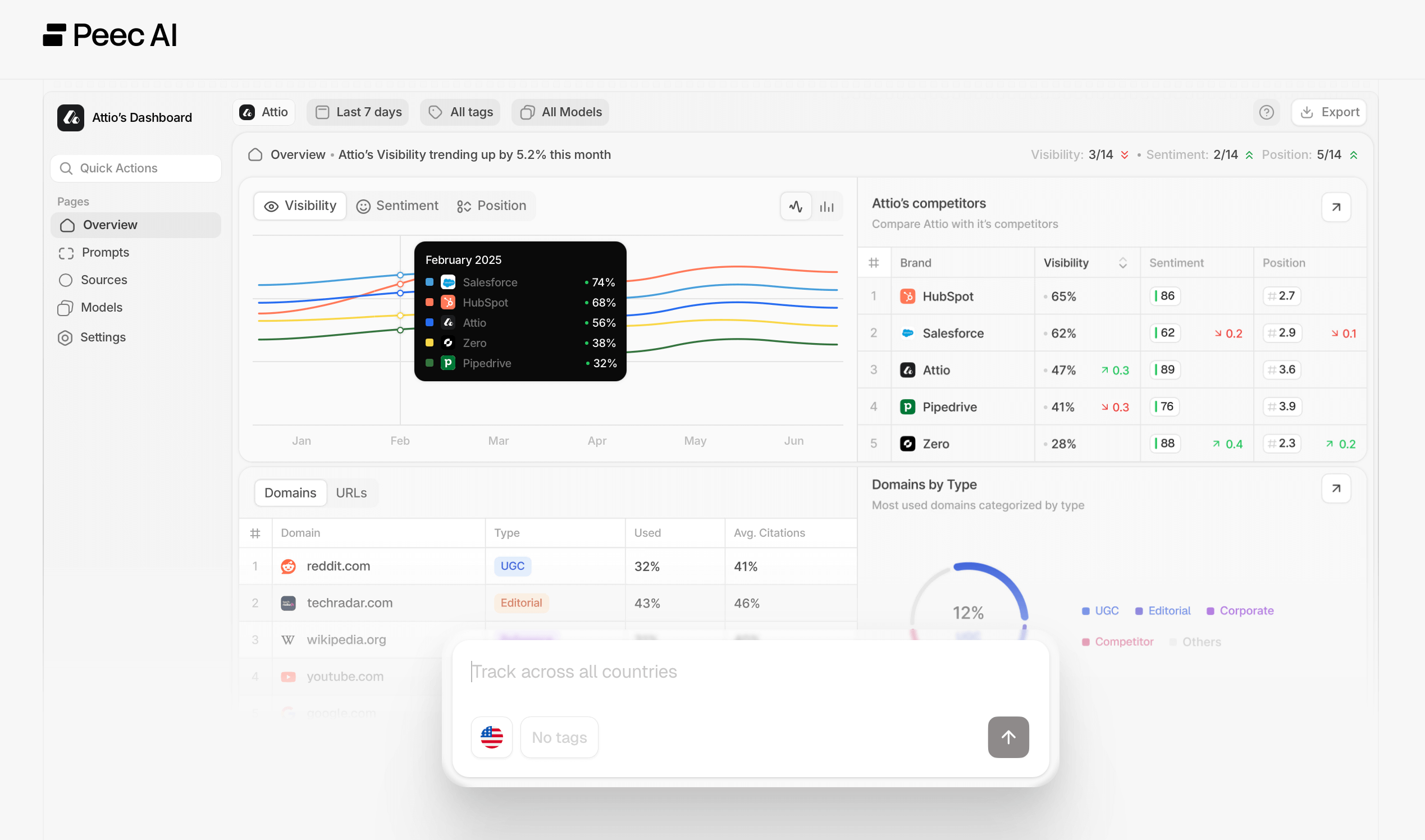
Peec AI raised a $21M Series A, bringing total funding to $29M. That’s one of the largest Series A rounds in the AI search space.
The team is Berlin-based and they’ve positioned themselves as the “simple, clean” alternative to complex enterprise platforms.
The tool tracks ChatGPT, Perplexity, Claude, Gemini and DeepSeek. It focuses on three core metrics: visibility (how often your brand appears), position (where you rank when mentioned) and sentiment (how positively you’re described). The UI is genuinely pleasant to use - Swiss-style design that gets you to the most important workflow steps quickly.
Peec’s suggested prompts feature saves time by automatically generating relevant prompts based on your website content.
The competitive analysis is solid, letting you track multiple competitors and see how you compare. You can see which exact URLs are citing your brand, perfect for outreach opportunities.
Peec’s limitations are basically monitoring-heavy features with limited actionable insights.
The platform tells you what’s happening and leaves interpretation to you. AI traffic attribution showing actual visitors from AI search as well as crawling events are missing.
The visibility tool also has no retroactive data - you can only view performance from when you started tracking. And some users on Reddit report confusing graph visualizations where similar colors make it hard to distinguish between data points.
Pricing starts at €89/month for 25 prompts (roughly $103/month), scaling up to €499/month for custom enterprise plans. Compared to other alternatives and the feature depth they offer at similar prices, Peec AI feels like you’re paying for brand and design polish over substance.
The $21M Series A suggests strong investor confidence and the team’s focus on product velocity shows their dedication to deliver the very best for marketers and SEOs.
Right now, Peec suits teams that value clean UX over comprehensive features and are willing to pay premium prices for simplicity.
AthenaHQ
- Best for premium enterprise features
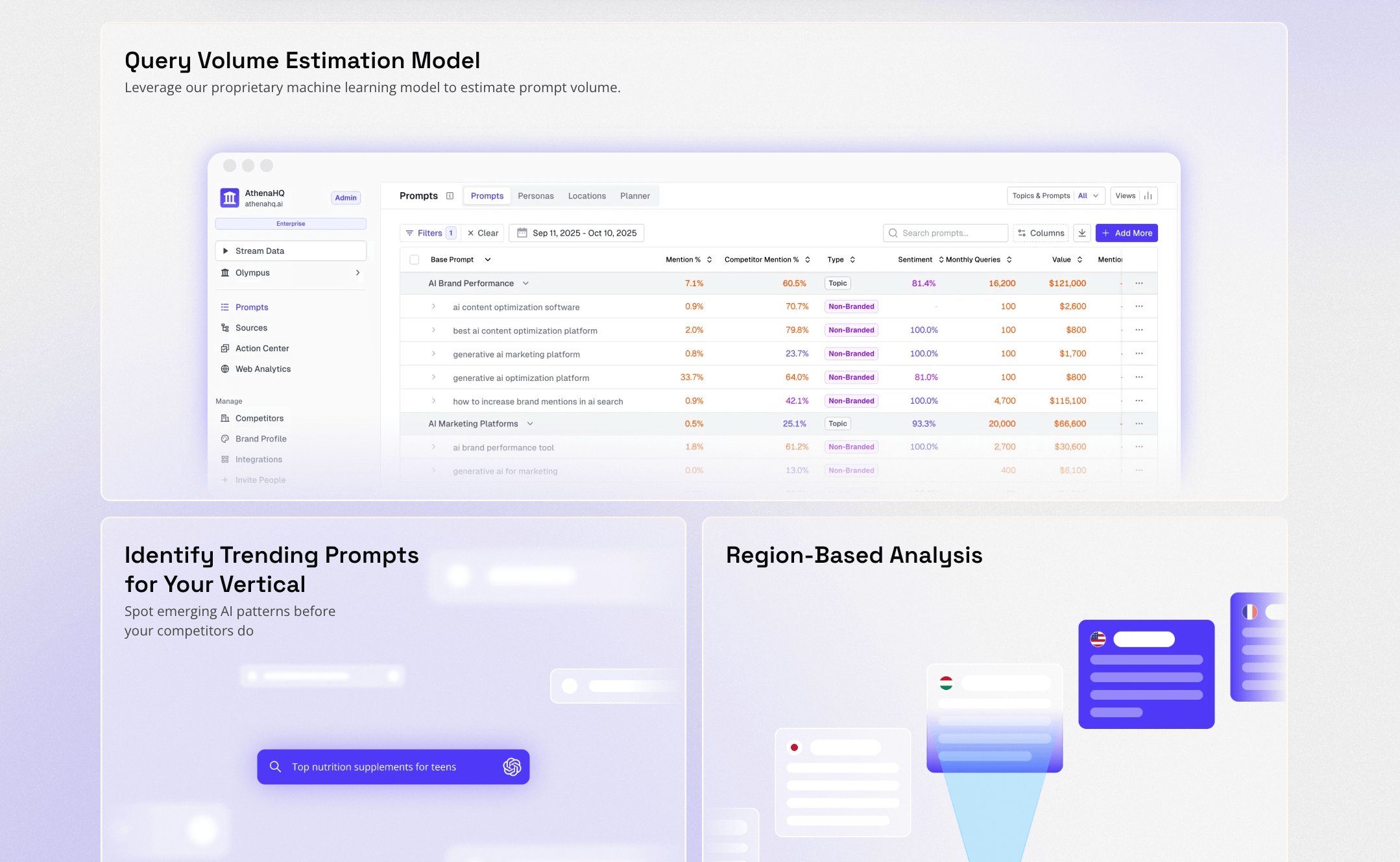
AthenaHQ was founded by former Google Search and DeepMind engineers, which immediately gives it credibility in the space. The platform is Y Combinator-backed and positions itself as the premium, expert solution for GEO.
The core offering includes the dashboard showing share of voice and GEO scores, prompt analytics tracking which queries trigger brand mentions, competitor benchmarking and AI-generated action recommendations through their Action Center.
Platform coverage includes ChatGPT, Perplexity, Claude, Gemini, Copilot and Google’s AI Overviews. The credit-based system (1 credit = 1 AI response) means monitoring a single prompt across 4 AI chatbots consumes 4 credits. Content asset creation eats 40 credits per asset.
Pricing starts at $295/month for 3,600 credits (Self-Serve plan), scaling up to custom enterprise pricing. That’s expensive - especially when you realize the entry plan gives you basic monitoring with limited optimization features.
AthenaHQ platform focuses heavily on monitoring and citations while lacking comprehensive revenue attribution capabilities.
In other words, rich analytics struggle with tying GEO efforts to tangible tracking ROI. For a platform charging premium prices, the inability to connect AI visibility to actual business outcomes is a critical weakness.
AthenaHQ excels at enterprise monitoring for organizations with substantial budgets and dedicated teams.
If you’re looking for execution tools and clear ROI attribution, platforms like Peasy, Writesonic or Promptwatch offer more at lower price points.
Otterly AI
- Best for AI keyword research tool

Otterly.AI is the most basic platform on this list, despite being among the first to enter the AI visibility industry. It’s the tool you would recommend to someone who’s never tracked AI visibility before and wants to understand the basics without enterprise complexity.
The platform tracks ChatGPT, Google AI Overviews, Perplexity, Google AI Mode, Gemini and Microsoft Copilot. It offers brand monitoring, link citation analysis, keyword research for AI prompts, GEO audits and automated weekly tracking.
The onboarding is simple - you drop in search prompts, Otterly runs them across all platforms, and you get reports showing brand mentions, link citations, rankings and sentiment. Reports update weekly automatically.
The AI keyword research tool is particularly helpful if you’re stuck on what prompts to track. You enter a keyword or brand name and Otterly generates conversational, natural-language phrases people are likely using. This prompt intelligence is becoming as important as traditional keyword research.
The link citation tracking shows which URLs were cited and in what order for every AI-generated response. You can see the full text output from each AI model, drill into brand ranking trends over time and compare visibility against competitors.
Pricing starts at only $29/month and the biggest downside is that for this price you can track only 15 prompts.
Otterly has limited optimization guidance. The interface can feel clunky once you get beyond basic tracking. Native content creation or optimization tools are absent as well, you’re purely monitoring and analyzing.
For teams on a budget who want to start tracking AI visibility without enterprise pricing, Otterly is an okay choice. Use it to understand where you stand, then graduate to more comprehensive platforms when you’re ready for advanced features.
Scrunch
- Best for SMB & enterprise monitoring
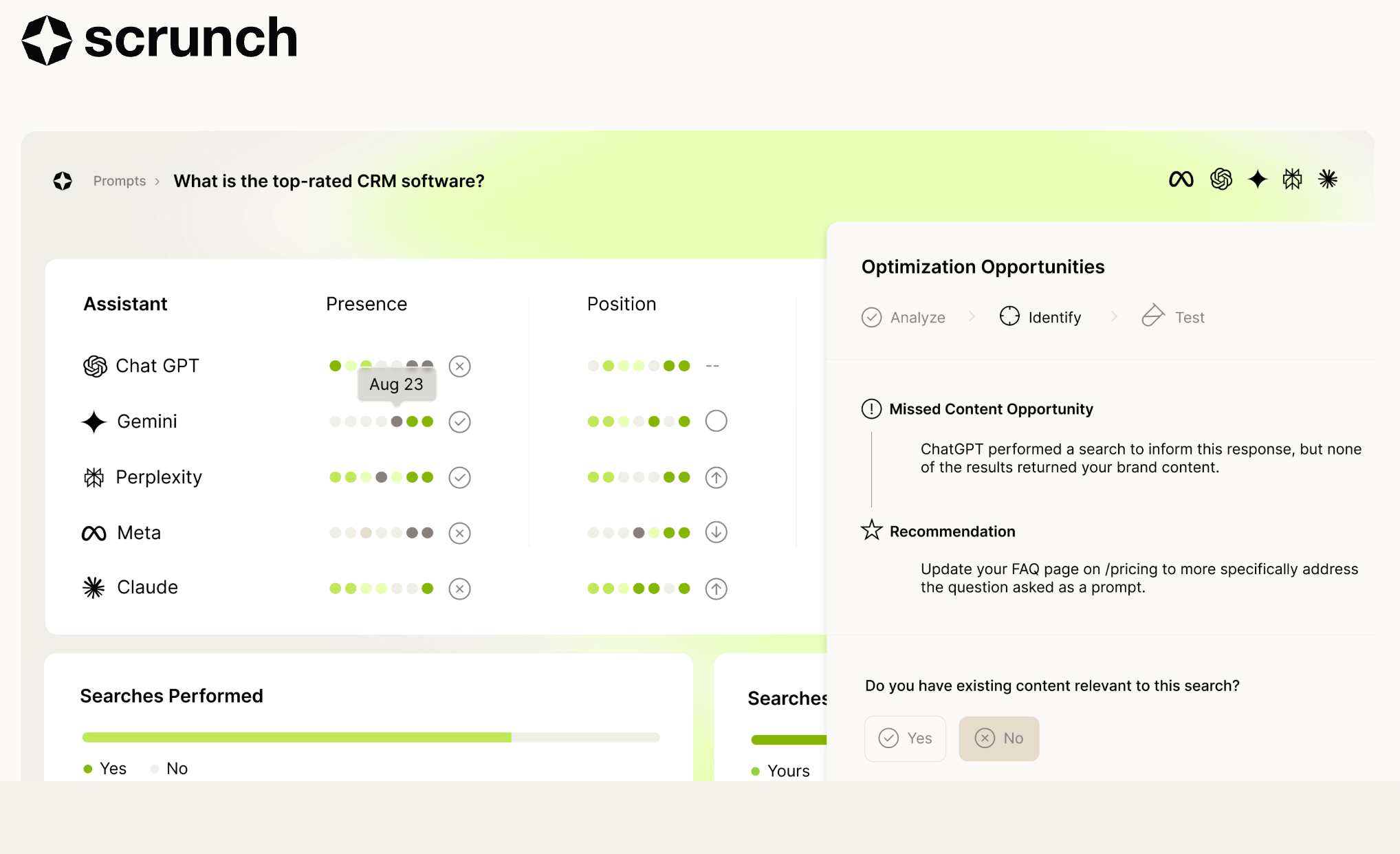
According to their official website, Scrunch serves over 500 companies including brands like Lenovo and Crunchbase. With SOC 2 certification, SSO integration and enterprise-grade infrastructure, Scrunch positions itself firmly in the enterprise segment, similarly to Profound.
Platform coverage is also comprehensive: ChatGPT, Claude, Perplexity, Gemini, Google AI Overviews, Google AI Mode and Meta AI. That’s seven platforms - more than most competitors.
The monitoring dashboard provides prompt-level tracking, competitor benchmarking, sentiment analysis and citation source intelligence.
The Agent Experience Platform (AXP) is Scrunch’s most interesting feature - an AI-optimized version of your website specifically for AI agents and crawlers. However, the feature remains in limited testing with no timeline for release. This has been “coming soon” for months…
Pricing starts at $300-$500/month for 350 custom prompts and three personas. That’s competitive against Profound and AthenaHQ and expensive compared to mid-market options like Otterly or Peec AI.
Scrunch excels at monitoring with limited capabilities beyond that. The platform converts keyword data into prompts rather than tracking actual prompts people use - which gives you approximations instead of real data. The optimization insights are sparse. You get visibility metrics with minimal guidance on actions to take.
If your priority is tracking brand mentions and competitive intelligence across the broadest range of platforms, Scrunch delivers. If you need execution tools and content optimization, you’ll need additional solutions.
SE Ranking
- Best for SEO suite integration
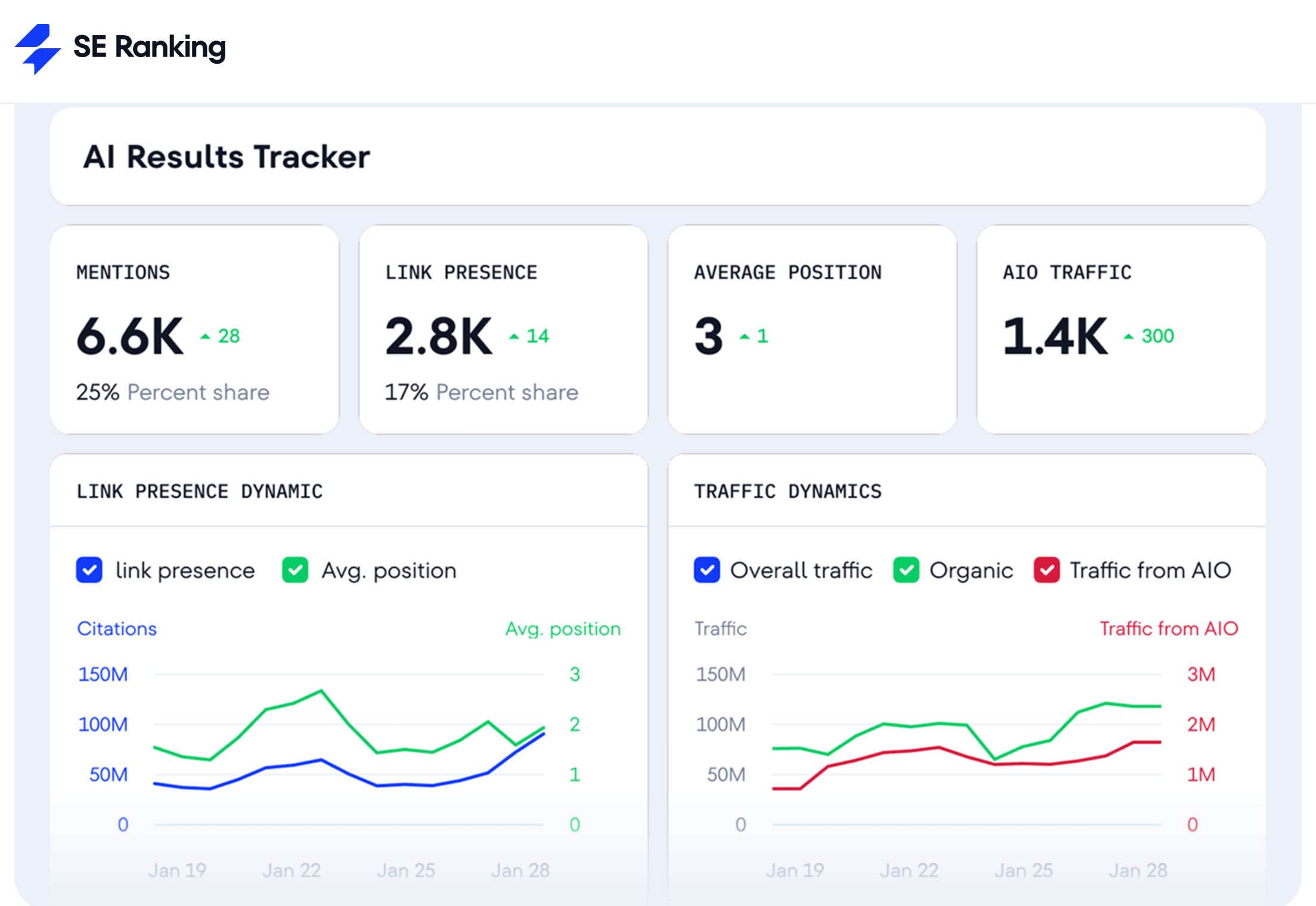
SE Ranking has been around for years as a solid SEO platform. Their AI Visibility Tracker is an add-on to their main SEO suite. If you’re already using SE Ranking, adding this makes sense. The decision becomes less clear if you’re starting fresh.
The tracker comes in three parts: AI Overviews tracker for Google snippets, AI Mode tracker for Google’s conversational search and unified visibility across ChatGPT, Perplexity and Gemini.
Platform coverage is decent with limitations - ChatGPT and Google are the leading engines they support.
The historical data feature is genuinely useful. You can see SERP snapshots showing how your brand appeared in AI answers over time, understanding what changed between crawls. This context is valuable for tracking optimization efforts.
Pricing is add-on based, without standalone AI visibility tracking plans.
The strength of SE Ranking is consolidation. If you’re already using their platform for rank tracking, SEO technical audits or content workflows, adding the AI visibility layer keeps everything in one place.
The downside is that you’re paying for an entire SEO suite even if you only want AI visibility tracking. Standalone AI platforms offer more specialized features at lower prices if you don’t need the full SEO toolkit.
SE Ranking’s AI tracker is practical and improving. The platform works best as part of a larger SE Ranking workflow rather than a standalone solution.
Ahrefs
- Best for Ahrefs users
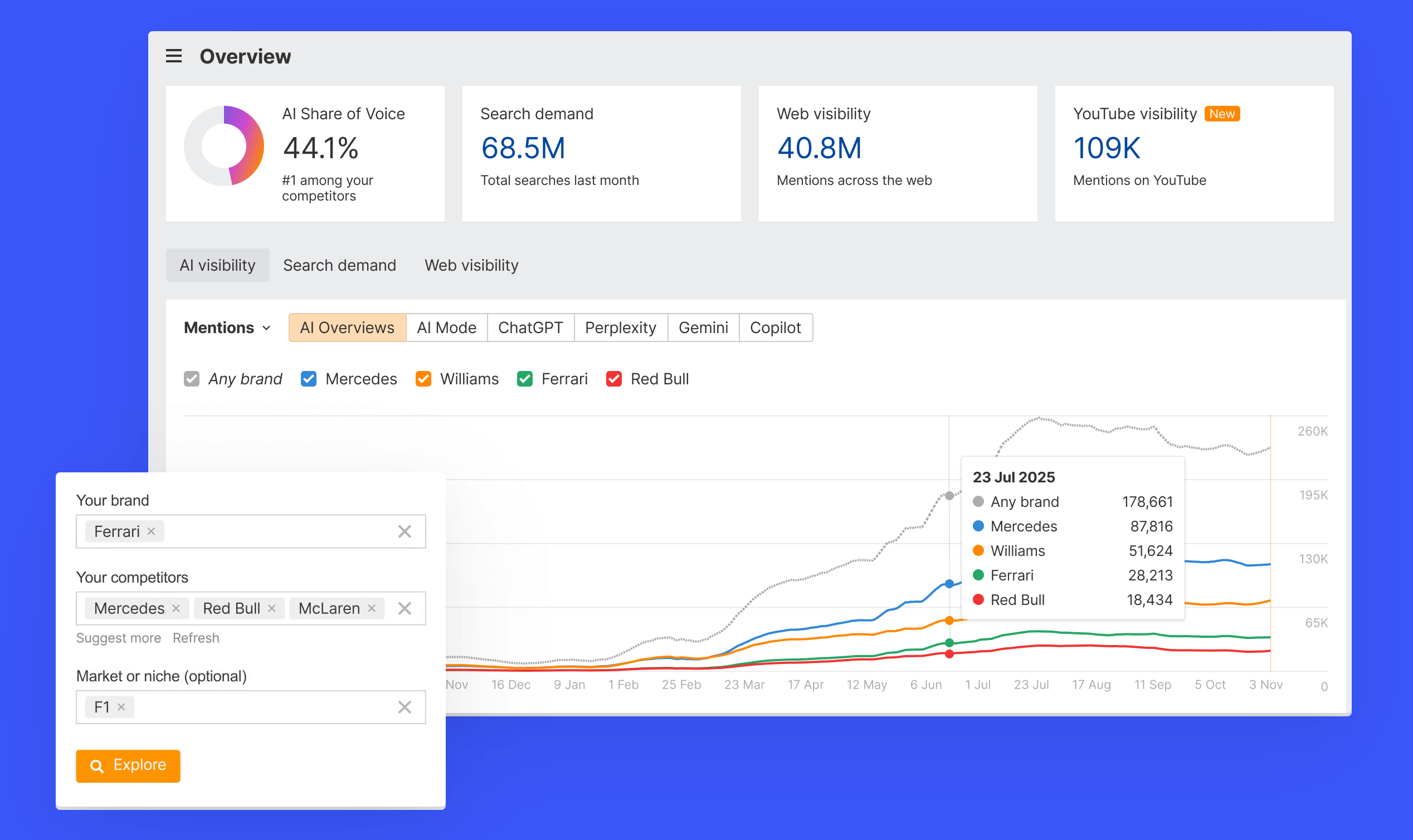
Ahrefs is one of the most respected names in SEO, known for their massive index and reliable data. Brand Radar is their entry into AI visibility monitoring, launched as an add-on to their existing SEO platform.
Like SE Ranking, Ahrefs approaches AI visibility as an extension of their core SEO tools suite rather than a standalone product.
The tool tracks brand mentions across AI platforms, monitors competitor visibility and provides citation analysis showing which sources AI systems reference.
The integration with Ahrefs’ existing backlink database is the platform’s biggest advantage. You can see where you’re cited in AI responses and also the underlying SEO authority of those sources through Ahrefs’ domain rating metrics.
This connection between traditional SEO signals and AI visibility is very convenient. Platform coverage includes the major players and isn’t as comprehensive as dedicated AI visibility platforms, feeling somewhat slightly limited.
The tool is clearly designed for brands already deep in the Ahrefs ecosystem who want to extend their existing workflows rather than teams working on their first AI optimization strategy.
Pricing follows Ahrefs’ typical model: expensive but comprehensive. You’re paying for the full Ahrefs suite with Brand Radar included at higher tiers (or $199-$699/month for Brand Radar alone).
The reality is that Ahrefs built Brand Radar because their customers demanded it, sort of a defensive move to prevent customer churn to specialized AI platforms.
The feature works and feels like an afterthought compared to Ahrefs’ core SEO capabilities.
If you’re already an Ahrefs power user and need basic AI visibility monitoring, Brand Radar is convenient. For teams where AI visibility is a priority, dedicated platforms like Profound, Peec AI or Promptwatch or even mid-market tools like Otterly, offer more depth and better value.
Semrush
- Best for Semrush users
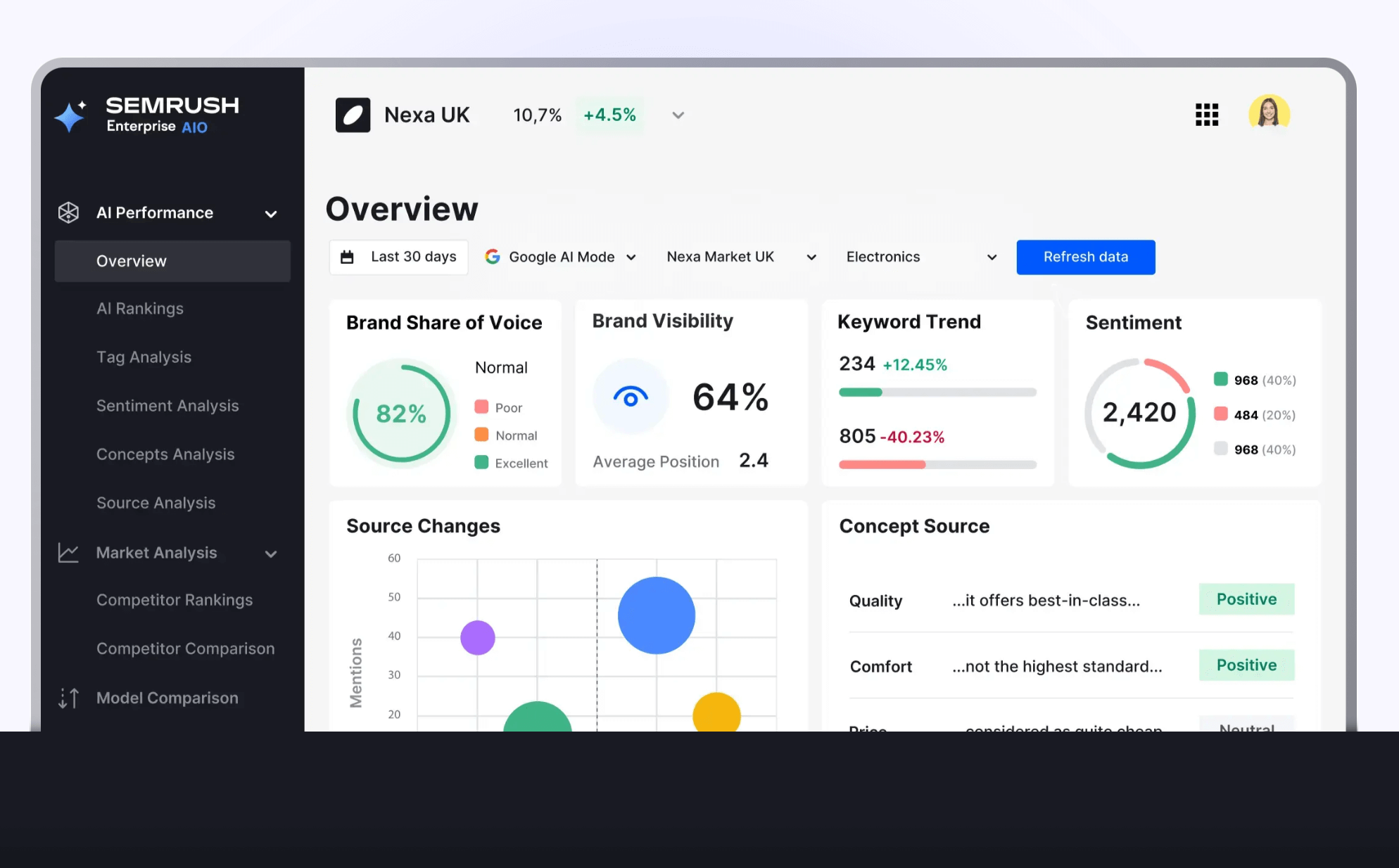
Semrush follows the same playbook as Ahrefs: take an established SEO platform, add AI visibility features and position it as an integrated solution. The AI Toolkit is available as a $99/month add-on to Semrush plans.
The tool includes AI visibility tracking across ChatGPT, Google AI Overviews and other major platforms.
Like other SEO suite add-ons, the strength is integration. If you’re already using Semrush for keyword research, search engine rank tracking or competitive analysis, adding AI visibility keeps everything in one ecosystem.
Semrush’s AI toolkit feels like a checkbox feature “yes, we have AI monitoring” rather than a dedicated AI visibility tool.
The data is reliable, the interface is familiar to Semrush users and there’s no innovation here. They’re playing catch-up to dedicated GEO platforms.
Use Semrush’s AI toolkit if you’re locked into the Semrush ecosystem and need basic visibility tracking. Don’t expect cutting-edge features or competitive pricing against specialized platforms. Things might change since Semrush was recently acquired by Adobe, though that’s yet to be seen.
Writesonic
- Best for content creation and monitoring
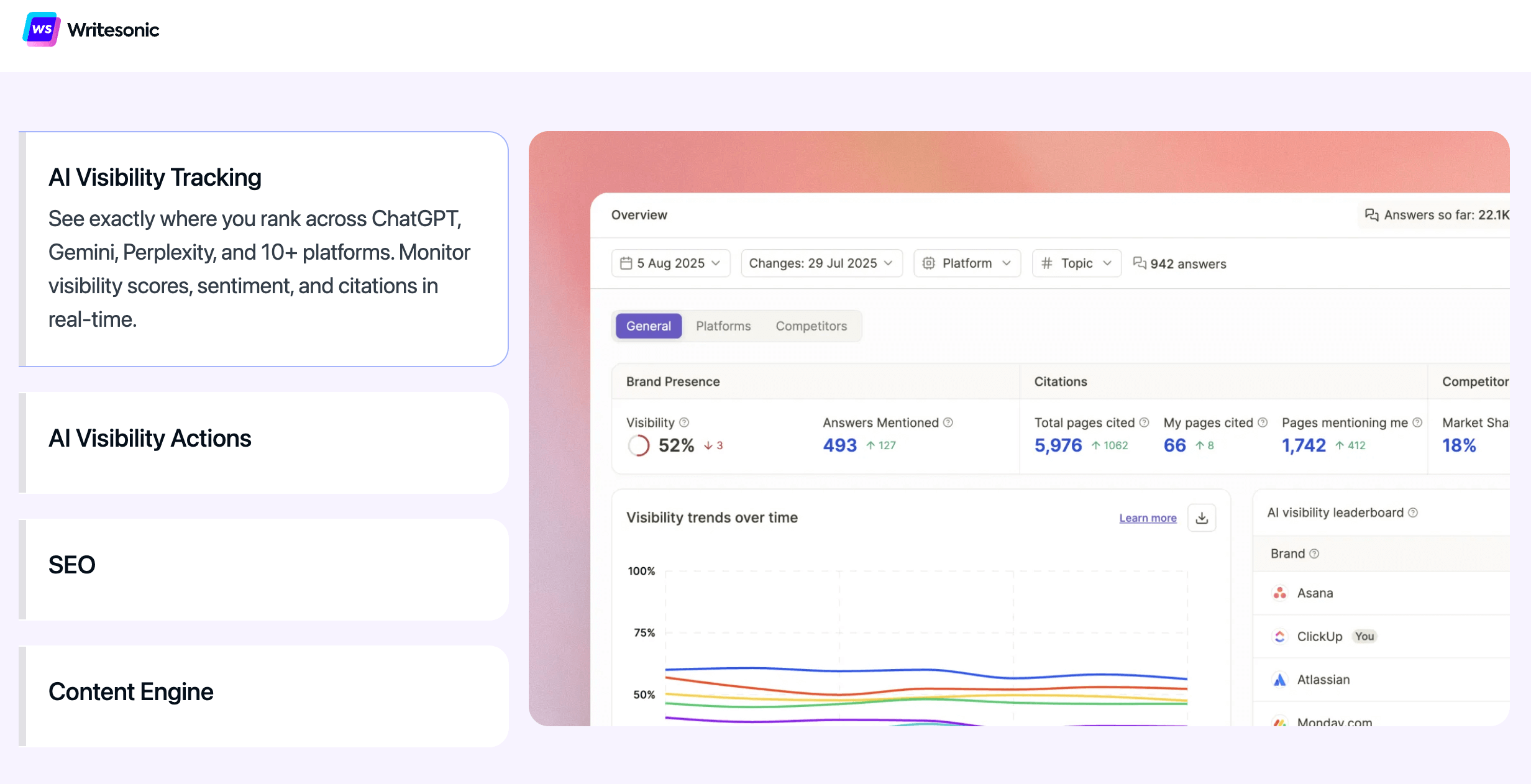
Writesonic started as an AI writing tool and that heritage shows. Their GEO platform is less about pure monitoring and more about combining visibility tracking with content generation - which is both a strength and a weakness.
The platform tracks ChatGPT, Perplexity, Google AI Overviews, Claude and Gemini. You get visibility metrics, competitor benchmarking, citation tracking and sentiment analysis.
The differentiator is the integrated content suite: AI-powered content creation, optimization recommendations and the Action Center that identifies prompts where competitors are mentioned and you’re not.
This “full workflow” approach, tracking and writing, is appealing. Instead of bouncing between a monitoring tool and a content creation tool, you do both in Writesonic.
The problem is that Writesonic’s monitoring lacks the sophistication of dedicated platforms. The firm started as a content writer and the GEO features feel bolted on rather than core to the product. Crawler analytics is missing. Advanced platform coverage is limited. The depth falls short.
Where Writesonic excels is for teams that need “good enough” monitoring combined with content optimization tools. You won’t get Promptwatch or Profound level visibility insights, but you will get actionable recommendations and tools to act on them.
The content generation quality is solid, Writesonic has years of experience here. If your primary need is understanding AI visibility, platforms built for that from the ground up serve you better.
SimilarWeb
- Best for traffic intelligence
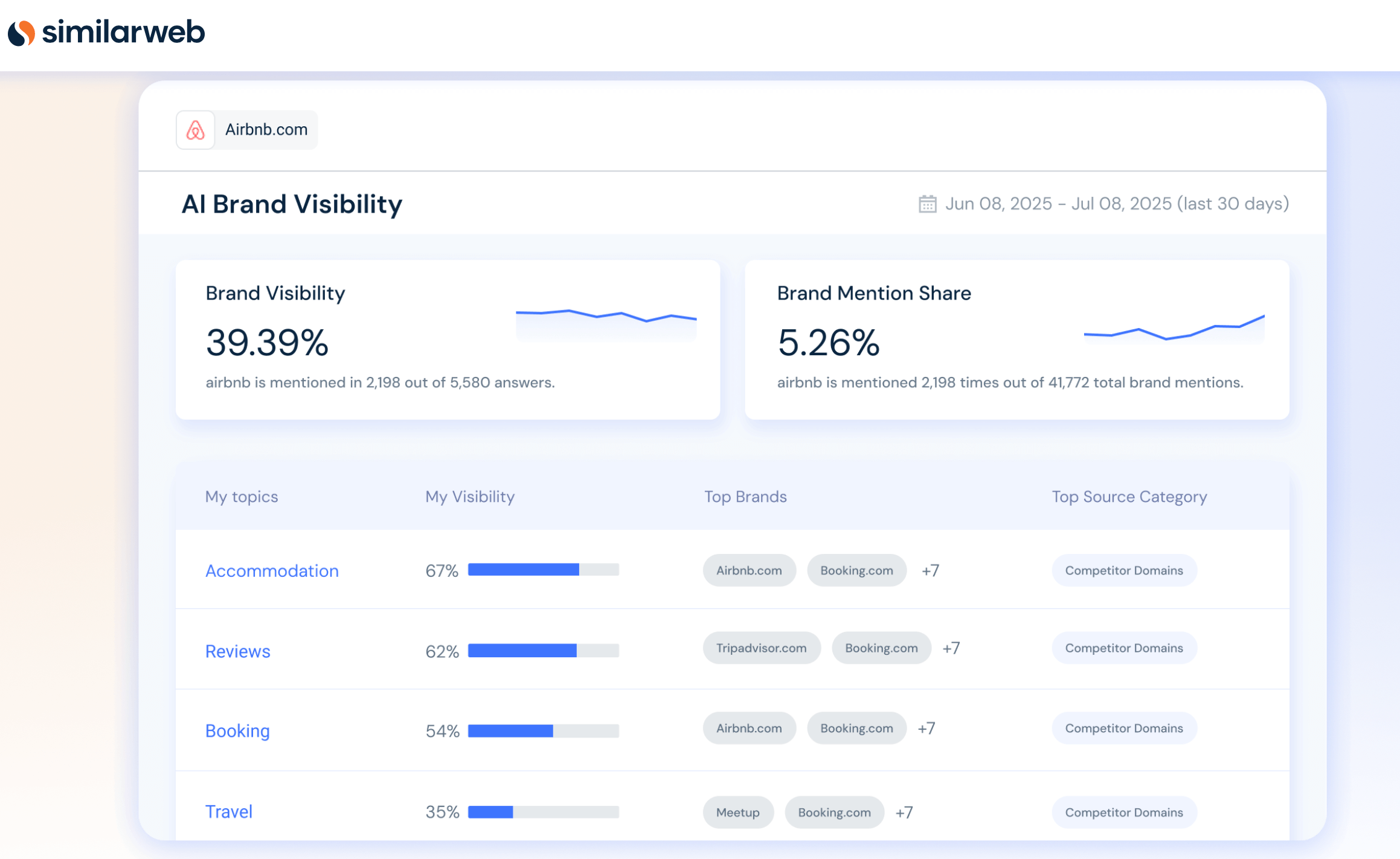
SimilarWeb is known for competitive traffic intelligence showing you how much traffic competitors get, where it comes from and how it trends over time. Their AI Brand Visibility tool extends this to AI platforms.
The product tracks brand mentions across AI search, provides competitive benchmarking and connects visibility metrics to estimated traffic impact. This traffic correlation is SimilarWeb’s unique angle - they’re trying to answer “how much traffic could I gain by improving AI visibility?”
Platform coverage includes the major AI players and isn’t exhaustive. The tool is clearly designed for existing SimilarWeb customers who already use the platform for competitive intelligence and want to extend that view into AI search.
Pricing is enterprise-focused and not publicly listed. SimilarWeb has always positioned itself as a premium competitive intelligence platform and the AI visibility tool follows that model. Expect multi-thousand dollar annual contracts.
The challenge with SimilarWeb’s approach is that AI search traffic patterns are different from traditional web traffic.
The correlation between visibility and traffic isn’t as direct as SimilarWeb’s models assume. Many AI mentions don’t include links. Citations don’t always drive clicks. The traffic intelligence methodology that works for traditional web analysis doesn’t translate perfectly to AI search.
For brands already invested in SimilarWeb’s ecosystem who need to add AI visibility to their competitive intelligence dashboards, the tool makes sense. For everyone else, it’s expensive and not specialized enough to justify the investment.
Choosing the right AI visibility tool
The AI visibility tracking space is crowded and most tools share more similarities than differences. In fact, we could have extended this list by probably adding another dozen tools even from big names like Wix and their AI Visibility Overview tool, or Adobe’s LLM optimizer tool, to name a few. As you may have noticed, the features, the UI terminology they use and the way they position themselves are nearly identical without any meaningful differences.
What separates the good from the mediocre is execution and the extra unique value they add to those seeking the ultimate solution. Promptwatch nails the complete product experience. Peasy focuses on verifiable traffic attribution and analytics instead of automated prompt testing. Profound has enterprise positioning and lacks substance relative to price. AthenaHQ charges for pedigree. Otterly makes it simple.
The right platform depends on what you actually need:
Choose Promptwatch if you need the best overall AI visibility tracking with comprehensive features and actionable insights.
Choose Peasy if you need real, verifiable AI traffic data with revenue attribution and crawler analytics.
Choose Profound or Scrunch if you’re an enterprise with substantial budgets and dedicated analytics teams.
Choose AirOps if you need content optimization tools for AI search.
Choose Writesonic if you need integrated content creation and monitoring.
Choose SE Ranking, Ahrefs or Semrush add-ons if you’re already using their SEO platforms.
Don’t get distracted by feature lists. Most platforms claim to do everything. What matters is whether the tool actually helps you improve your AI visibility. And remember, no tool can accurately track “rankings” in AI search. Answers that AI chatbots deliver are non-deterministic and any synthetic prompting that the majority of these tools are offering are approximate estimations at best. There is no sure way to “rank” in AI search.
What these platforms can do is track patterns, citations, visibility trends and brand mentions.
Choose based on what you need to accomplish, focusing on actual improvements rather than impressive demos.
AI Visibility Tools Comparison Table
Complete Feature Comparison
| AI Visibility Tool | Pricing | Tracked LLMs | Number of Tracked Prompts | Tracking Type | Best For | Key Features |
|---|---|---|---|---|---|---|
| Peasy | $47/month | ChatGPT, Claude, Perplexity, Gemini, DeepSeek, Cohere, Mistral, Google Search Console | Unlimited | AI analytics, 100% verifiable real-time data | SEO professionals, Marketing teams, Analytics, Ecommerce, SaaS | Real AI traffic attribution, Crawler analytics, Citation tracking, Revenue tracking, Privacy-first analytics |
| Promptwatch | $75/month | ChatGPT, Claude, Perplexity, Gemini, DeepSeek, Cohere, Grok, Meta AI | 50 prompts | AI search, Automated prompt tracking | SEO professionals, Marketing teams, Benchmarking, Competitor analysis | Multi-model testing, Content gap detection, Sentiment analysis, Multilingual support |
| AirOps | Custom pricing | ChatGPT | 100 prompts | AI search, On-site optimization | Content creation, Content optimization, Marketing teams | AI-powered content analysis, Content optimization recommendations, AI search discoverability |
| Profound | $99-$399+/month | ChatGPT, Claude, Perplexity, Gemini, DeepSeek, Grok, Microsoft Copilot, Meta AI, Google AI Overviews | Varies by plan | AI search, Automated prompt tracking | Enterprise brands, Large marketing teams | Answer Engine Insights, Agent Analytics, Prompt Volumes, ChatGPT Shopping visibility |
| Peec.ai | €89-€199/month | ChatGPT, Claude, Perplexity, Gemini, DeepSeek | 25-100 prompts | AI search, Automated prompt tracking | Marketing teams prioritizing UX, Small to medium businesses | Visibility metrics, Position tracking, Sentiment analysis, Suggested prompts |
| AthenaHQ | $295/month | ChatGPT, Claude, Perplexity, Gemini, Copilot, Google AI Overviews | Credit-based (3,600+ credits) | AI search, Automated prompt tracking | Enterprise brands, SMBs | Visibility Dashboard, Action Center, GEO scores, Share of voice metrics |
| Otterly.AI | $29-$199/month | ChatGPT, Perplexity, Gemini, Google AI Overviews, Google AI Mode, Microsoft Copilot | 15-100 prompts | AI search, Automated prompt tracking | Small businesses, SEO teams, Startups | Brand monitoring, Link citation analysis, AI keyword research, Weekly automated tracking |
| Scrunch | $250-$300/month | ChatGPT, Claude, Perplexity, Gemini, Google AI Overviews, Google AI Mode, Meta AI | 350 prompts | AI search,, Automated prompt tracking | Enterprise brands, Agencies | Prompt tracking, Agent Experience Platform (AXP), SOC 2 certified, Multi-platform monitoring |
| SE Ranking | $89-$345/month (add-on) | ChatGPT, Perplexity, Gemini, Google AI Overviews, Google AI Mode | 200-1000 prompts | AI search, Automated prompt tracking | SE Ranking users, SEO agencies | Historical SERP snapshots, Integrated with SEO suite, Multi-platform tracking |
| Ahrefs | $99-$999/month (included in suite) | Major AI platforms | Varies | AI search, Automated prompt tracking | Ahrefs power users, SEO professionals | Backlink database integration, Domain rating metrics, Citation analysis |
| Semrush | $99/month (add-on) | ChatGPT, Google AI Overviews, Major LLMs | 50 prompts per LLM | AI search, Automated prompt tracking | Semrush users, Enterprise organizations | Question Report, Traffic dashboard, Integrated with Semrush suite |
| Writesonic | $199/month | ChatGPT, Claude, Perplexity, Gemini, Google AI Overviews | Varies | AI search, Automated prompt tracking | Content-heavy teams, SMBs, Marketing agencies | Content creation, Action Center, Optimization recommendations, Integrated content suite |
| SimilarWeb | Enterprise (custom pricing) | Major AI platforms | Enterprise-level | Traffic correlation | Enterprise brands using SimilarWeb | Traffic impact estimation, Competitive benchmarking, Traffic intelligence |
Table last updated: December 2025
Attribute every AI visit to revenue and growth.
Easy setup, instant insights.

based on real user feedback